The Model Home Isn’t the Product: What to Investigate Before Buying New Construction
Walking into a new-construction model home is designed to make you fall in love.
The lighting is perfect. The kitchen is fully upgraded. The landscaping is finished. The furniture is carefully placed. And the community brochure makes the entire neighborhood feel like the life you've always imagined.
There’s nothing wrong with that.
But the model home is a presentation—not the complete picture.
When you buy new construction, you're not simply buying a house. You're buying into a builder, a community, a financial structure, a construction process, and a future you can't completely see yet.
That's why the smartest buyers look beyond the finishes.
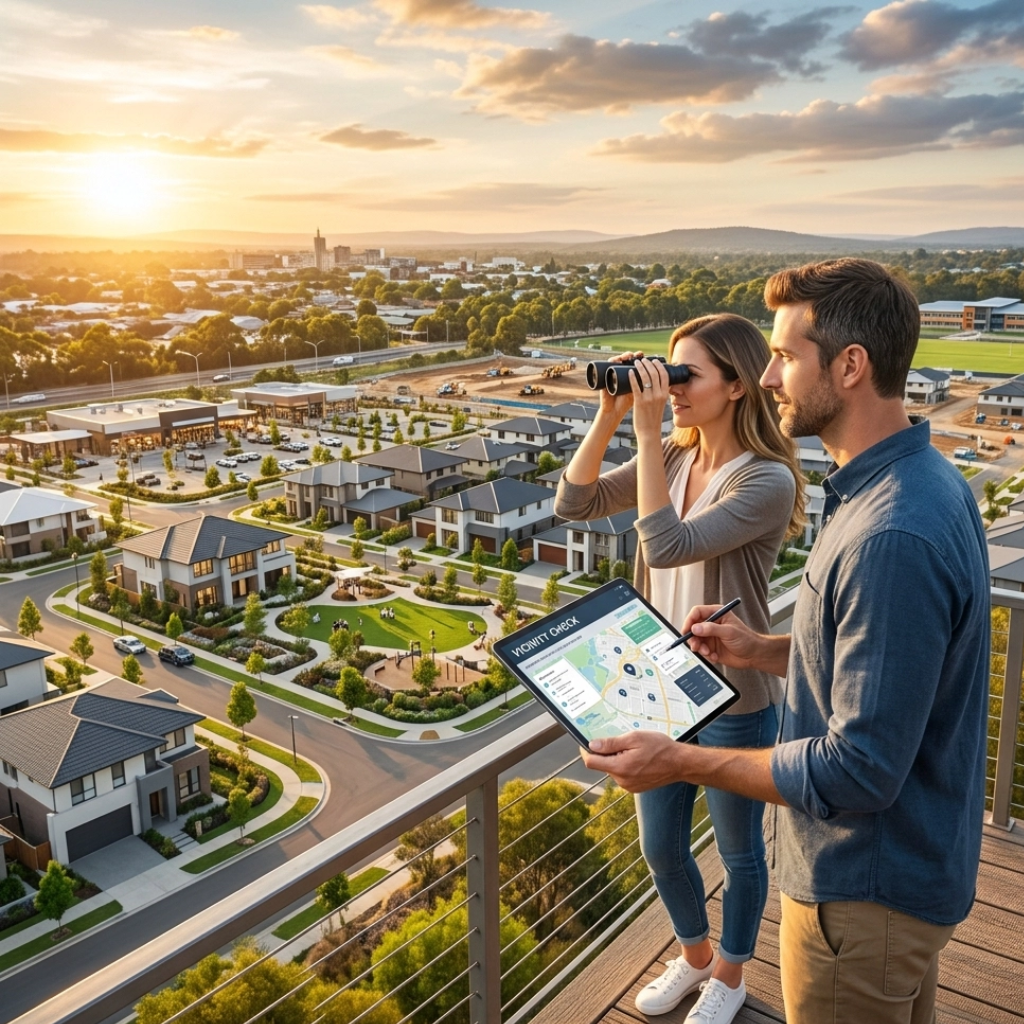
At Vicinity, we call this the Vicinity Check: a deeper look at the factors that can affect what you pay, how the home performs, and what life will actually be like after you move in.
Here are three areas worth investigating before you fall in love with the model.
1. The Financial Audit: What Will This Home Really Cost?
The advertised price is a starting point—not necessarily the number that determines whether the home fits your budget.
With new construction, your actual monthly cost may include:
Property taxes
HOA fees
CDD or other community assessments
Homeowners insurance
Lot premiums
Structural options
Design upgrades
Closing costs
Mortgage costs
Some of these expenses are easy to overlook because they aren't part of the headline price.
Look Beyond Today's Estimate
Taxes and community assessments can change as a development is completed and properties are reassessed. Insurance costs can also vary dramatically by location, construction characteristics, and coverage requirements.
That doesn't mean a new home is a bad financial decision.
It means you should understand the all-in cost before you commit.
A $450,000 home with relatively low ongoing expenses may ultimately be more affordable than a $425,000 home with significant assessments, insurance costs, and required upgrades.
The better question isn't:
"How much is the house?"
It's:
"What will it cost me to own this home?"
That's the number worth comparing.
2. The Builder Audit: Look Beyond the Finishes
A model home tells you what the builder wants you to see.
It doesn't necessarily tell you how the home will perform five or ten years from now.
The countertops, flooring, lighting and cabinetry are important. But they're the visible layer of the home.
The less visible elements deserve attention, too.
Investigate the Builder's Track Record
Before choosing a builder, look at:
Previous communities they've completed
Warranty and customer-service history
Construction timelines
Local reputation
Building permits and inspection history
Independent homeowner experiences
How they respond when something goes wrong
One useful exercise is to visit an older community built by the same builder.
The newest community will always look the best. A five-year-old neighborhood can tell you much more about how the homes and the builder's service have aged.
Look at the homes.
Talk to residents if they're willing to share their experience.
Notice how the landscaping, roads, common areas and homes have held up.
And remember that online reviews can be useful without being definitive. A review written shortly after closing primarily tells you about the buying experience. It may tell you very little about how a home performs years later.
Pretty Isn't a Performance Metric
A beautiful kitchen is a beautiful kitchen.
It isn't evidence of structural quality.
That's why an independent home inspection—particularly an inspection before drywall is installed—can be so valuable during construction.
The goal isn't to assume something is wrong.
It's to understand what you're buying while there's still an opportunity to identify and address issues.
3. The Lifestyle Audit: What Will Living Here Actually Be Like?
This may be the most overlooked part of new-construction shopping.
A community can look perfect on a Saturday afternoon and feel completely different during your normal Tuesday.
A builder may advertise that you're minutes from shopping, dining, employment centers or major highways.
But what does "minutes" actually mean at 8:00 a.m.?
And what happens when the community is fully built?
Investigate the Life Around the House
Before you buy, look at:
Commute:
Test the drive during the hours you actually travel.
Schools:
Look beyond current ratings and understand boundaries, capacity and planned changes.
Amenities:
Determine which amenities are completed today and which are planned for future phases.
Shopping and services:
How far are groceries, healthcare, restaurants and everyday necessities?
Future development:
What is planned around the community? New roads, commercial development, additional housing or infrastructure can dramatically change an area's character.
Land use:
That wooded view behind your backyard may be beautiful—but is it actually protected?
The house is only one part of the lifestyle you're purchasing.
Don't Confuse "New" With "Finished"
One of the unique challenges of buying new construction is that you're often purchasing a future.
The community may still be growing.
The roads may still be under construction.
The amenity center may be planned but not completed.
Nearby commercial development may not exist yet.
And the surrounding land may eventually look very different from the day you sign your contract.
That's not necessarily a disadvantage.
In fact, buying into an emerging community can provide tremendous opportunity.
But you should know what is promised, planned, under construction and actually completed.
Those are four very different things.
The Best New-Construction Buyers Ask Better Questions
You don't need to become a construction engineer, tax expert or urban planner to make a smart decision.
You simply need to ask better questions.
Before signing, ask:
About the money:
What will my estimated monthly cost be after taxes, insurance, HOA and other assessments?
Are there community assessments or CDD obligations?
Which upgrades are included?
Which upgrades are optional?
What incentives are being offered, and what do they actually save me?
About the builder:
What communities has this builder completed nearby?
How does the warranty process work?
What inspections are recommended?
Can I hire my own independent inspector?
What happens if construction is delayed?
About the community:
Which amenities are complete?
What is still planned?
What additional phases are expected?
What development is planned nearby?
How could the area change over the next five to ten years?
About the lifestyle:
What will my commute actually look like?
Where will I shop?
Where is the nearest healthcare?
What are the school boundaries?
What will my daily life look like here—not just my first weekend?
These questions don't make the buying experience less exciting.
They make the decision more informed.
The Vicinity Check: Look Beyond the Model
This is the thinking behind the Vicinity Check.
We believe choosing a new-construction home should involve more than comparing floor plans and starting prices.
It should mean understanding the community, the builder, the costs and the lifestyle before you make the commitment.
Because the best home isn't necessarily the one with the biggest kitchen or the prettiest model.
It's the one that works financially, structurally and practically for the life you intend to live.
The Bottom Line
New construction can offer buyers something resale often can't: a new home, modern construction, personalization and the opportunity to become part of a community from the beginning.
But buying new doesn't mean you should stop asking questions.
The model home shows you the dream. The data helps you understand the decision.
Before you sign the contract, look beyond the brochure.
Check the money.
Check the builder.
Check the community.
Check the life you'll actually be living.
That's the Vicinity Check.
About the Author
Carla Goddard
Vicinity
I’m Carla Goddard, CEO & Founder of Vicinity and a longtime real estate professional with deep experience in new construction. I founded Vicinity around a simple belief: new construction isn't resale, and buyers deserve to understand what they're actually buying. The builder controls the transaction. The agent's role is to make sure the buyer doesn't lose control of the decision. Vicinity brings the community, costs, lifestyle, development and details together so buyers and agents can look beyond the model home and ask better questions. Because expertise isn't having every answer. It's knowing what to ask before it's too late.
View Profile →